Office Burst Pipe Repair
Commercial Plumbing
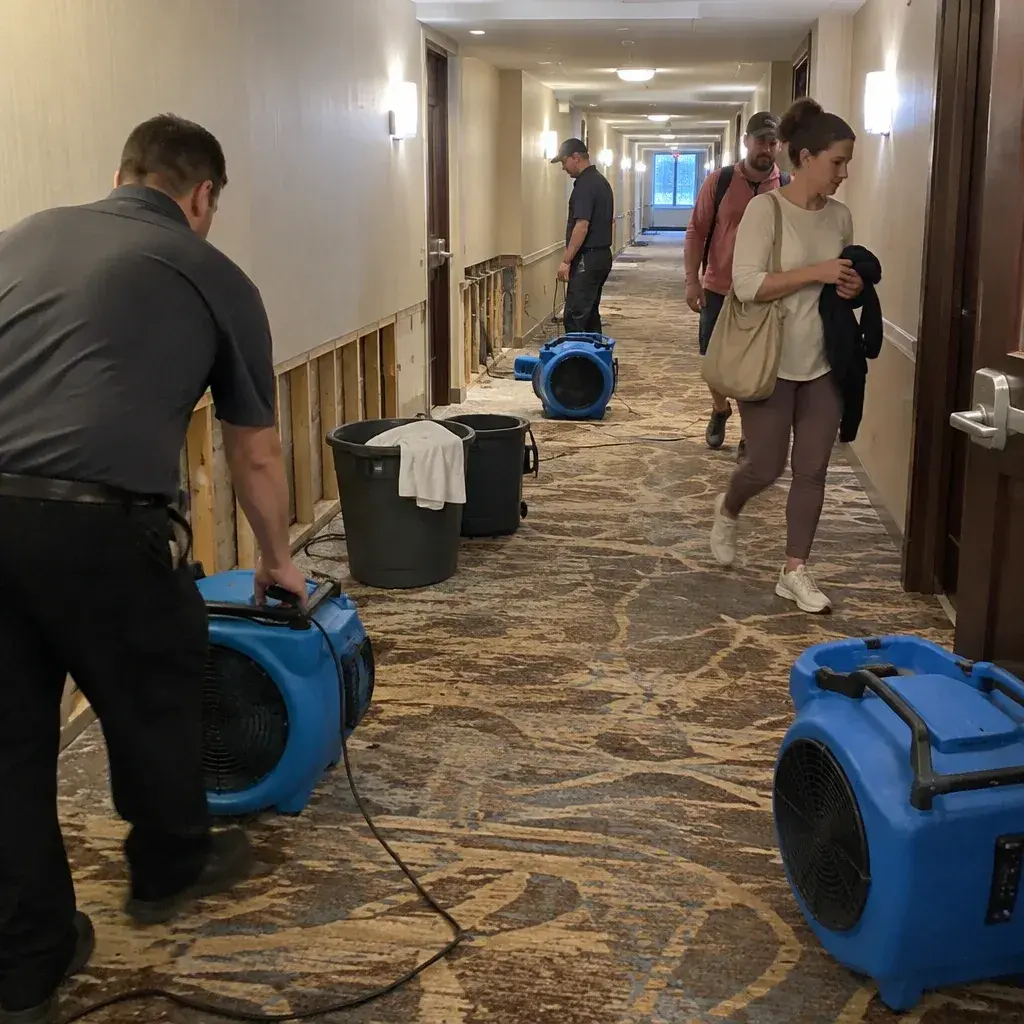
Coordinate room access and service isolation with staff while the plumber assesses the hotel’s damaged water line.
Hotel staff can identify affected rooms, access rules, visible symptoms, and maintenance contacts. The plumber traces the supply, coordinates isolation with staff, repairs the damaged section using compatible parts, and checks for leaks and restored flow. Staff manage room status and separate drying or finish work.
The cost of emergency burst pipe repair at a hotel can reflect access arrangements and how many occupied areas need coordinated inspection. A ceiling stain above a guest room may prompt staff to check nearby rooms and shared service areas, since the visible mark may not show where water first appeared. Give the pros we connect you with room numbers, reported symptoms, restricted access times, and the maintenance contacts who can approve entry. That information helps shape an assessment around guest privacy and hotel operations.
A ceiling stain above a guest bed, a wet service closet, or a leak along a corridor wall gives the plumber a starting point, not a confirmed pipe location. Water can travel through a building before reaching a visible surface. Room numbers, floor details, and the time staff first noticed a symptom help link reports across floors or shared spaces. That pattern can guide inspection toward a supply line serving one room, several rooms, or an operational area, and help narrow the access needed to find the break.
Room entry can affect guest privacy as well as the plumber’s access to a concealed supply line. Give the facilities contact the reported room numbers, any known entry limits, and details about nearby service closets or shared areas. The contact can coordinate an approved route and tell the plumber which staff member handles room access. If inspection moves from a guest space to a corridor or ceiling area, that route should be understood before work proceeds. Good coordination helps the plumber investigate without staff losing track of which spaces are involved.
Decide who will receive repair updates and who can relay them to front desk, housekeeping, and facilities staff. A single contact can pass along which spaces need access, what area the plumber is examining, and whether the work may affect a shared service. Keep guest-facing updates within the hotel’s usual communication process. This reduces conflicting instructions when room status or access arrangements change, while giving the plumber a reliable person to consult as the source is traced and the repair scope becomes clearer.
| Affected Area | What You Notice | Access Lead |
|---|---|---|
| Affected area | Building, floor, and room identifiers | Connect reports across rooms |
| Observed evidence | Sounds, spray, staining, or dampness | Mark first and later sightings |
| Guest access | Occupancy status and entry limits | Coordinate entry with hotel staff |
| Shared supply | Rooms and amenities on the branch | Clarify service impact of isolation |
| Suspected route | Exposed pipe or likely concealed path | Flag access constraints for assessment |
| Operating needs | Hotel services affected by shutoff | Coordinate plans with relevant departments |
| Repair details | Pipe type, size, and connection if known | Record materials and leak check |
| Return checks | Water flow and any open work | Document status for room handback |
Before scheduling water isolation, have the plumber and hotel maintenance contact identify which rooms and services depend on the affected line. A branch serving a guest room may have different operational effects from one that also supplies a housekeeping area or another shared space. You can then coordinate guest notices, room changes, and staff access around the planned interruption. This service map also helps the hotel avoid treating a single report as an isolated room issue when other operations may rely on the same plumbing.
Once the affected branch is understood, share the hotel’s occupancy needs and operating schedule with the plumber before choosing an isolation window. A busy room turnover, food service period, or other water-dependent operation may affect when staff can support a planned interruption. The repair still depends on locating and isolating the damaged line, but a coordinated window helps staff prepare for the service change. Tell the teams responsible for affected rooms or functions what the plumber expects to isolate, and update them if the service boundary changes.
Once the plumbing work is complete, ask the plumber to confirm that water flow has returned and the repaired area shows no leak. Facilities staff can use that check to decide whether the affected room is ready for its next operational step, while keeping any separate room recovery decisions with the appropriate hotel team. Record the check and who received the update. A documented handoff gives the front desk a reliable basis for changing a room’s status and answering staff questions about the affected service.
A maintenance report may describe a drip, a spray, or a continuing leak, but those observations do not establish that a lasting repair has been made. For an accessible section, the plumber can assess whether a temporary clamp is suitable to slow the leak while arranging the proper repair. A clamp is not a substitute for evaluating the damaged line and completing a compatible repair. In a hotel, let facilities staff know what work remains so they can manage access and avoid treating a temporary measure as a return-to-service signoff.
Ask the plumber’s repair note to identify the building area and affected line, the failed section, and the work performed. Include the pipe type and the replacement parts or fittings used when known, along with any access opened to reach the pipe. This gives facilities staff a practical reference if the same area raises a concern later or another technician needs to understand the repair. Keep the note tied to the hotel’s property records and work order so it can be found without depending on a verbal explanation.
Before the affected supply is returned to service, the plumber should check the repaired section for leakage under water pressure and confirm that flow has resumed. Facilities staff can coordinate which rooms or functions need notice while the check takes place, then confirm the relevant service is available again. A passing check documents the plumbing result; it does not establish that nearby finishes are dry or ready for guests. Keep those room-recovery decisions with the staff and providers responsible for the affected space.
File the incident where facilities staff can retrieve it by property and affected area. Include the first report, rooms or services involved, access arrangements, repair details, and the plumber’s return-to-service check. Note who coordinated entry and who received operational updates, so a later shift can trace decisions without reconstructing them from separate messages. If room recovery is still underway, record that status separately from the plumbing result. A complete file supports maintenance follow-up and gives the next facilities contact a usable account of the work.
Before arranging a building assessment, gather the affected room numbers, visible symptoms, entry restrictions, and maintenance contacts who can coordinate access. Add the floor or shared area where staff noticed the issue, and note whether the reported spaces have a known plumbing connection. These details help the pros we connect you with prepare for a hotel setting and identify who can answer questions about room access or building systems. If you know which services could be affected by isolation, include that information for the assessment.
A useful handoff tells the next staff member what was reported, where the plumber found the break, what repair was made, and whether water flow and the repaired section were checked. Add which rooms or services were involved, any access arrangements that remain relevant, and the contact responsible for follow-up. Keep any outstanding room recovery work visible as a separate item. With that account, the next shift can see the plumbing status and continue coordinating affected spaces without repeating the investigation.
Emergency burst pipe repair costs depend on break location, compatible parts, access, and how many guest areas or shared services need coordination. For hotel burst pipe repair, give the pros we connect you with affected room numbers, visible symptoms, entry limits, and a maintenance contact. A plumber can trace the supply serving those rooms, coordinate entry with staff, and plan any isolation with operations before opening a wall or ceiling. Record the work and return-to-service checks for the property team. Dedicated pages cover selected places; other covered locations reach the pros we connect you with through the same referral.
A location without its own Burst Pipe Repair page can still use the same referral to ask about service nearby; dedicated place pages cover locations includingChugiak AK, Eagle River AK and Anchorage AK. Before choosing a time, ask how arrival is priced and whether a longer drive changes the charge for the first visit.
Stopping the leak can help limit water damage to nearby equipment and materials. Access to concealed piping and matching replacement parts to the installed system also shape the work.Commercial estimates can change when a larger supply line needs fittings suited to its system or when access affects the repair. When calling, share the pipe material, size, and connection type if known, where the line can be reached, and which area lost water. Ask whether locating the break is included.Use pricing guide to compare factors that shape a commercial repair estimate; commercial overview describes the assessment before work starts.
Commercial Plumbing
Multifamily Pipe Repair
Share the room or work-area identifiers, floor, visible signs, and when staff first noticed them. Explain entry procedures, guest privacy needs, and any restricted areas, then name the staff member who can arrange access and the maintenance contact who can discuss the line. A photo or a brief description of sounds or changes in water service can help direct the assessment, but the plumber must verify the pipe route and break location.
Yes. A water line can serve fixtures or rooms beyond the place where moisture appears, and a shared branch may also support hotel services. The plumber can trace the supply and discuss which areas may lose water during isolation. Staff can then coordinate guest and department notices around the planned work. Visible water in one room alone does not establish which rooms or systems connect to the damaged section.
Keep the plumbing findings with the hotel’s maintenance record. Note the affected area, pipe material and size, the section repaired or replaced, and fittings used. Record which supply was isolated, when service was restored, and the plumber’s leak and flow check results. Link any separate drying or finish work to its own work order so later reviewers can tell which tasks concerned the pipe and which addressed the room.
The plumber can confirm whether the repaired line held during leak checks and whether water flow returned. Hotel management should use its room and department procedures to decide when the space is ready for use, considering any other work or operational needs. A plumbing check does not establish that wet materials have dried or that finishes are restored; those assessments belong with the relevant hotel staff or separate providers.
Gather room identifiers, entry requirements, visible symptoms, and maintenance contacts before arranging a hotel pipe assessment.
Call (800) 215-5682