Factors Behind Sudden Pipe Breaks
The site has pages for specific places across Alaska, Alabama, Arkansas, Arizona, California, Colorado, and Connecticut, as well as the District of Columbia. Elsewhere in its coverage, you reach the pros we connect you with through the same referral. Cold exposure and pipe placement vary from home to home, so a national page cannot identify one local cause.
A home may contain copper alongside plastic pipe after earlier plumbing changes. That can affect where a repair joins the existing run: the plumber has to identify each material and use a connection suited to both systems rather than assume the whole line matches.
Requests are grouped by the city and county tied to a service area. A location page lets visitors start with the service area that matches their request.
What a Pressurized Pipe Break Means
- MATERIAL
- The copper’s diameter and condition at the cut points help determine whether a replacement piece can connect cleanly to the remaining pipe.
- DAMAGE
- Copper size and connection style guide which fittings and joining method suit a replacement section.
- ACCESS
- A small cutout may work when the defect is contained and usable copper remains at both ends.
- REPAIR
- With water restored, inspecting the new joints under pressure can reveal seepage before the access area is closed.
- CHECK
- Once water is restored, the plumber inspects repaired joints under pressure and checks that fixtures supplied by the line receive water.
- COST FACTORS
- Winter freezing can expand water inside an unheated copper run and split its wall; the damage may become apparent during spring flow. Seasonal temperature changes can also move pipe connections, so the visible leak may appear after the stress began.
- PIPE TYPE
- an estimated $275–$1,100
How Pipe Type Guides a Suitable Repair
PEX supply tubing is flexible plastic, while copper is rigid metal, so a short exposed section can be mistaken for another nearby pipe. A visible fitting alone may not reveal the material; the plumber can identify the line before selecting compatible parts. On an exposed, dry line, copper is rigid metal with metal fittings. PEX is flexible plastic tubing, while CPVC is rigid plastic. If the material is unclear or only a fitting is visible, let the plumber identify the system before choosing replacement parts.
Accessing Pipe Within Finished Spaces
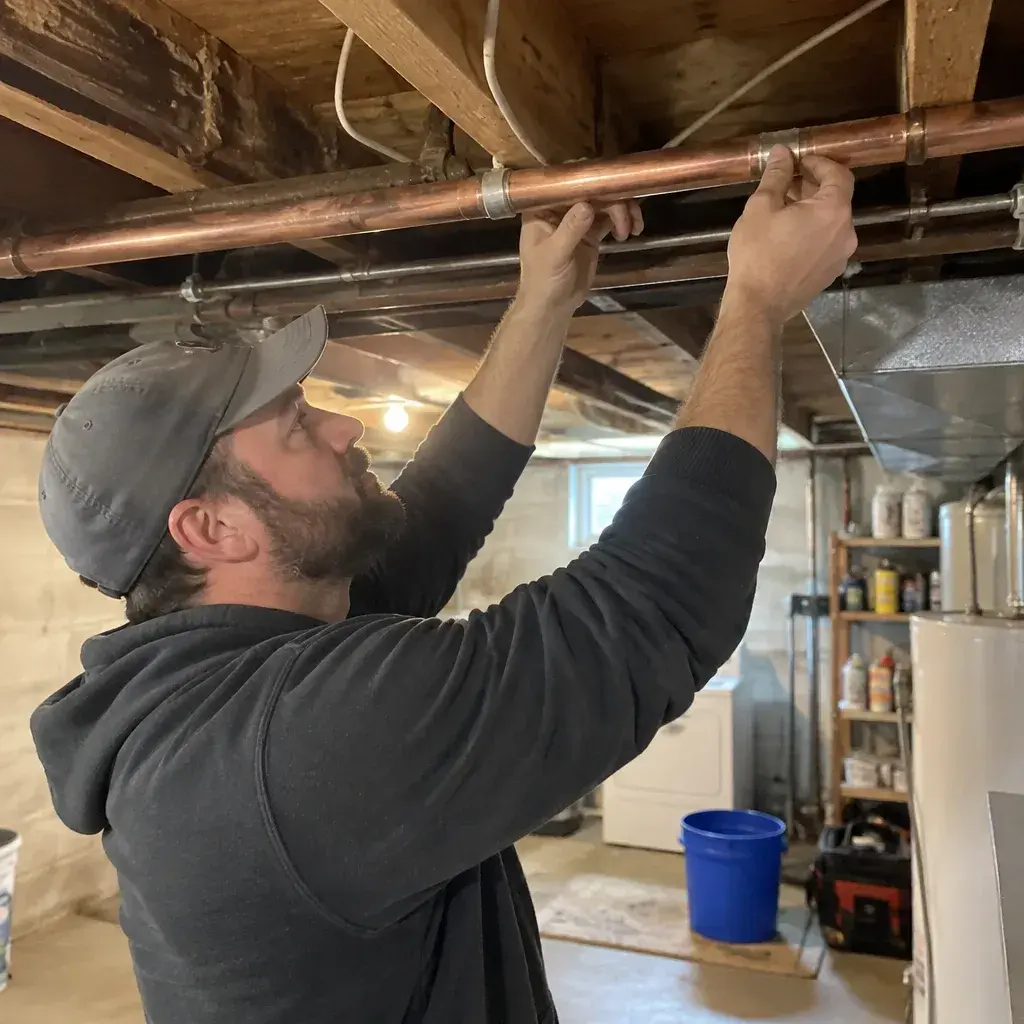
The plumber follows the wet path to the copper supply pipe and inspects the split, nearby joints, and the tube around possible connection points. The pipe’s condition shows whether a compact cutout can leave sound ends for joining or whether the damaged area extends farther along the run.
The plumber traces the leak, isolates the water supply, and examines the copper around the split for sound pipe and workable access. A localized repair can join sound ends; broader deterioration or restricted access may call for replacing more of the run. The plumber fits compatible copper and connections, restores pressure, then checks for seepage before closing access.
The cost depends partly on whether compatible pipe and fittings are clear once the break is exposed. $350–$1,300 A contained repair can often be completed in one visit. If inspection identifies another suspect section, ask for its location and condition before agreeing to continuing work.
ADDRESSING A PRESENT BREAK OR SCHEDULING SYSTEM ATTENTION
| Repair Method |
Repair Suitability |
|---|
| A fresh leak, caught before it spreads | Damage-based estimate |
| Previously mended pipe starts leaking again | Pressure leak test |
| Breaks separated along the same pipe run | Water line mended; outlet flow observed |
REPAIR SCOPEPlumbing requirements can vary by jurisdiction, and no specific regulator or code is identified here. Ask the plumber which local requirements apply and request an invoice describing the copper section repaired or replaced, the fittings used, and the leak check performed.
Signs of Water Damage Indoors
Water escaping from a pressurized split can soak framing and migrate beyond the spot where it first appears. Prolonged dampness can damage finishes and leave hidden materials wet after the pipe is repaired. The plumber addresses the copper line; restoring affected parts of the home is a separate scope of work.
Expect the Repaired Line to Be Checked
If a copper line is leaking, keep people away from the water and any nearby electrical equipment. If you can reach the home’s water shutoff without entering a wet or unsafe area, turn it off. Note where the leak appears, then contact the pros we connect you with for an assessment. Don’t try to seal or replace the pipe yourself.
Tracing Water to the Broken Line
A burst copper line can soak walls, flooring, and belongings, and water near outlets or appliances can create an electrical hazard. If it is safe to reach, shut off the home’s main water supply and keep clear of wet electrical areas. The pros we connect you with can assess the damaged section and replace it as needed.
Is Leak Checking Part of the Repair Cost?
A hard-to-reach break can add work before the line is repaired; ask the pros we connect you with to describe that access work in their estimate.The guide amount reflects work on the damaged supply line and can shift with its position, access, and the section needing replacement. A concealed break may require opening a finished surface before the plumber can see the full repair. Water extraction, drying, and rebuilding fall outside $350–$1,300 and call for separate services.The full spread of charges, with common cost drivers, appears in pricing guide.